Matches Seeds
Kale Vates Blue Curled Scotch
Kale Vates Blue Curled Scotch
Impossible de charger la disponibilité du service de retrait
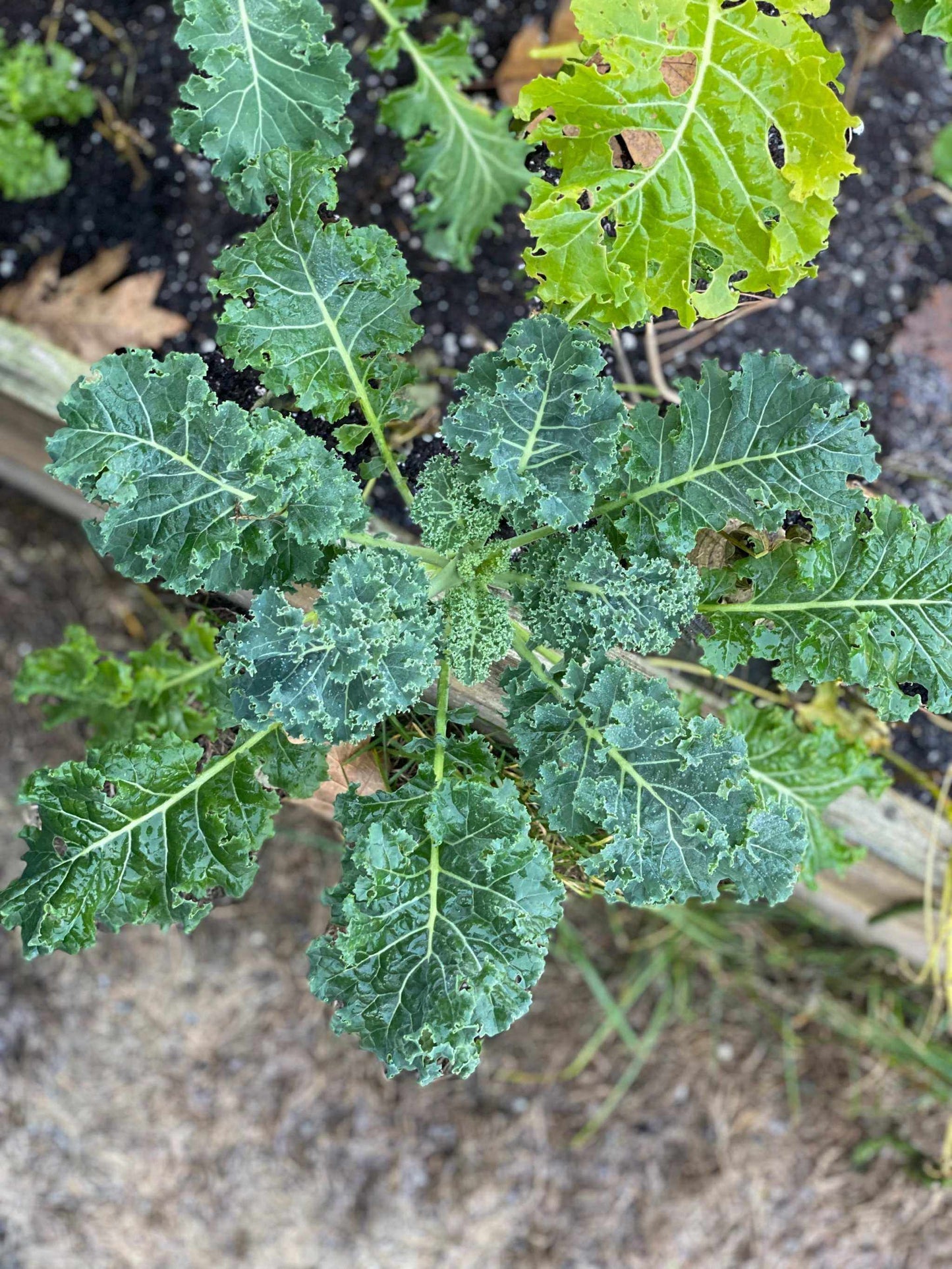
Kale Vates Blue Curled Scotch is an heirloom kale variety noticeable by tightly curled, blue-green leafy foliage with fine ruffles. These non-treated, non-GMO seeds are designed for home gardeners seeking a nutrient-dense vegetable option. This kale is bred for resilience, featuring a compact, upright growth habit that resists yellowing in high temperatures and withstands heavy wind conditions. Recognized for its cold hardiness, Kale Vates Blue Curled Scotch thrives during autumn and winter, converting stored starches into sugars in cooler temperatures to enhance sweetness and tenderness.
Seeds typically produce mature kale leaves within 55–60 days, while baby greens can be harvested as early as 30 days after planting. Mature plants generally reach a height of 30–35 cm (12–14 inches) with a spread of 30–60 cm (12–24 inches). The kale exhibits a loose, open growth pattern without forming a central head, making it suitable for containers, raised beds, or exposed, windy locations. It prefers at least 6 hours of direct sunlight and well-draining, nutrient-rich soil. Maintaining consistent soil moisture is essential for tender leaves and to prevent toughness, especially when temperatures range between 7°C and 24°C.
Planting and Care
- Direct sow kale Vates Blue Curled Scotch seeds at a depth of approximately 6 mm (1/4 inch) to facilitate germination.
- Plant in spring about 4 weeks before the last expected frost; for autumn and winter harvests, sow in late summer.
- Space individual plants 30–45 cm (12–18 inches) apart to promote healthy growth and reduce the risk of powdery mildew.
- Apply an organic mulch layer around each plant to regulate soil temperature and conserve moisture, supporting steady leaf development.
Use Cases
- Ideal for home gardeners with limited space who want a cold-hardy, resilient kale for year-round harvesting.
- Suitable for budget-conscious gardeners, as Kale Vates Blue Curled Scotch seeds are affordable, non-treated, and non-GMO, providing high yields with minimal input.
- Perfect for growing kale for salads, sautés, kale chips, or implementing a continuous cut-and-come-again harvest cycle to maximize productivity.
Harvest Tips
- Harvest small, 7–10 cm (3–4 inch) leaves for fresh salads; allow plants to grow fuller for cooking or processing.
- Regularly remove the oldest leaves from the bottom of the plant, leaving the central terminal bud intact to encourage new growth.
- The flavor and tenderness of kale improve after exposure to the first frost, making late-season harvests especially desirable.
Included and Care
The package contains non-treated, non-GMO kale Vates Blue Curled Scotch seeds. Not included are planting containers or soil amendments. To ensure ongoing production, store seeds in a cool, dry place and follow standard germination procedures. Kale should be harvested regularly for continuous growth, and any uneaten greens should be stored in a cool, moist environment to preserve freshness.
Share