
Grow organic vegetables from seed: a Canadian gardener's guide
Growing organic vegetables from seed is the most direct way to control your food from the very first stage of life. You skip synthetic treatments, choose varieties suited to your climate, and spend a fraction of what transplants cost. Starting from seed is approximately 10 times more cost-effective than buying pre-grown transplants. That gap matters when you are planting an entire garden bed. This guide covers seed selection, soil preparation, sowing methods, and seed saving so you can grow vegetables from seed to harvest with confidence.
What seed varieties are best for organic vegetable gardening?
Seed type is the first decision you make, and it shapes everything that follows. The four main categories are organic certified, untreated conventional, F1 hybrid, and heirloom or open-pollinated. We focus on Untreated and Regenerative Gardening.
Untreated conventional seeds have not been coated with fungicides or other chemicals. Untreated conventional seeds are fully acceptable for organic growing as long as your methods stay chemical-free. This is a relief for gardeners who cannot always find certified organic versions of the variety they want.
F1 hybrid seeds produce vigorous, uniform plants, but their saved seeds do not reliably reproduce the parent plant’s traits. Heirloom and open-pollinated seeds breed true and allow seed saving year after year. That reliability makes them the preferred choice for anyone building a self-renewing garden.
The best first choices for beginners include:
-
Leafy greens: lettuce, spinach, kale, and Swiss chard germinate quickly and tolerate cool Canadian springs
-
Radishes: ready in as few as 25 days, ideal for testing your soil and technique
-
Beans and peas: direct-sown, fast-growing, and forgiving for new gardeners
-
Tomatoes and peppers: require indoor starting but reward patience with high yields
Matchesseeds carries non-treated, heirloom varieties selected for Canadian climates, which removes much of the guesswork around regional performance.
How do you prepare soil for starting seeds?
Healthy soil is the foundation of vegetable gardening. No amount of careful sowing fixes poor growing conditions below the surface.
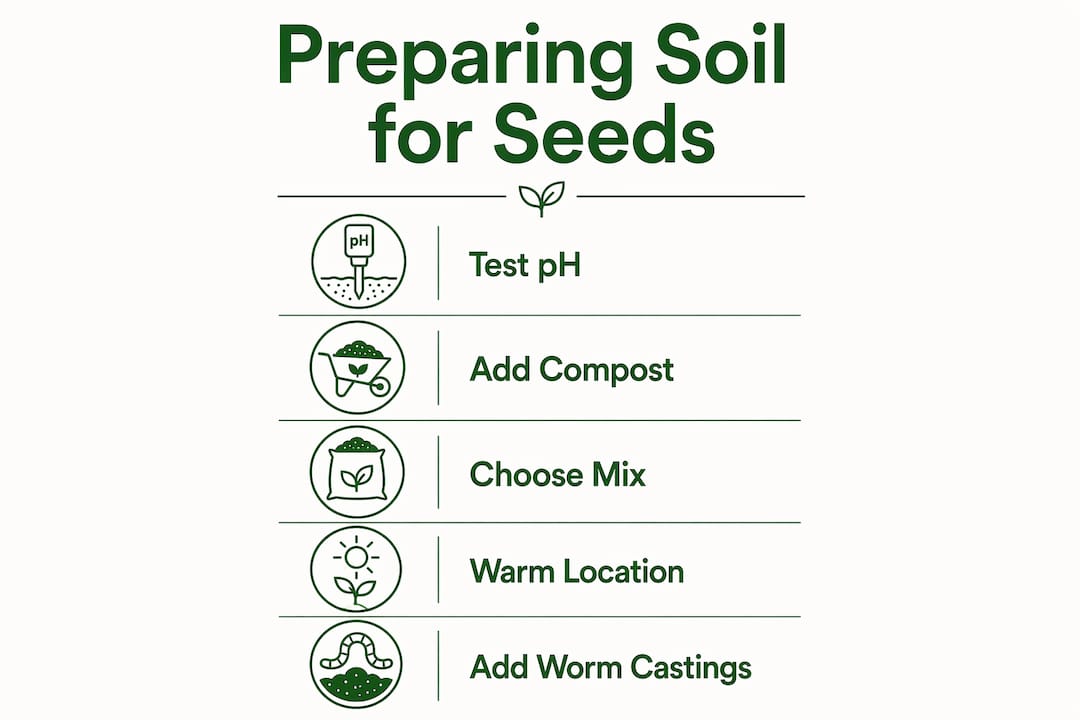
For outdoor beds, test your soil pH before planting. Most vegetables thrive between pH 6.0 and 7.0. Add compost, aged manure, or leaf mould to improve structure and feed soil biology. Avoid walking on prepared beds, as compaction reduces the air pockets roots need to grow.
For indoor seed starting, use a dedicated seed-starting mix rather than garden soil. Garden soil compacts in containers, restricts drainage, and often carries pathogens that kill seedlings. A good seed-starting mix is light, sterile, and holds moisture without becoming waterlogged.
| Vegetable | Ideal pH | Light requirement | Minimum soil temperature |
|---|---|---|---|
| Tomatoes | 6.0–6.8 | Full sun | 18°C |
| Lettuce | 6.0–7.0 | Partial shade | 4°C |
| Carrots | 6.0–6.8 | Full sun | 7°C |
| Beans | 6.0–7.0 | Full sun | 16°C |
| Spinach | 6.0–7.5 | Partial shade | 4°C |
Choose a warm, bright location for indoor seed starting. A south-facing windowsill works for cool-season crops, but warm-season plants like tomatoes and peppers need supplemental grow lights to avoid becoming leggy.
Pro Tip: Mix a small amount of worm castings into your seed-starting mix. Worm castings add gentle, slow-release nutrients without burning delicate seedling roots.
Step-by-step guide to sowing and caring for vegetable seeds
Sowing at the right time and in the right way determines whether your seedlings thrive or struggle. The method depends on the crop.
Starting seeds indoors
Warm-season crops like tomatoes, peppers, and eggplants need to be started indoors 6–8 weeks before your local last frost date. They require 7–14 days to germinate and need 14–16 hours of daily light to grow strong stems. A timer on your grow light removes the guesswork entirely.
Direct sowing outdoors
Root vegetables and legumes should be direct-sown outdoors because transplanting stunts their root development. Transplant shock deforms taproots and reduces yields in carrots, radishes, and beans. Sow these crops directly into prepared beds once soil temperatures reach the minimums in the table above.
The main sowing and care tasks
-
Fill containers or trays with moistened seed-starting mix, leaving 1 cm of space at the top
-
Sow at the correct depth: a general rule is two to three times the seed’s diameter
-
Label every tray with variety name and sowing date before you forget
-
Water gently using a fine mist or bottom-watering to avoid disturbing seeds
-
Provide consistent warmth of 18–24°C for germination; a heat mat speeds this up for warm-season crops
-
Move seedlings under lights immediately after germination to prevent stretching
-
Pot up when seedlings develop their first true leaves and roots fill the cell
-
Harden off before transplanting outdoors
Hardening off is the step most beginners skip, and it is the one that causes the most losses. A 7–10 day acclimation period of gradually increasing outdoor exposure prevents transplant shock and strengthens plant cell walls. Start with one hour of outdoor shade, then increase sun and wind exposure daily.
Succession planting by sowing small batches every two weeks produces a steady harvest rather than a single large glut. This approach keeps your kitchen supplied with fresh vegetables for a much longer period. Planning harvest timing this way also reduces waste significantly.
How do you save and store seeds?
Seed saving is what separates a one-season garden from a self-renewing food system. It costs nothing once you have the right varieties growing.
The easiest vegetables to save seeds from are:
-
Beans and peas: let pods dry completely on the plant before harvesting
-
Tomatoes: ferment seeds briefly in water to remove the gel coating, then rinse and dry
-
Lettuce and herbs: allow plants to bolt and form seed heads, then collect when dry
-
Squash and cucumbers: scoop seeds from fully mature fruit, rinse, and dry flat
The key principle is patience. Seed saving requires letting plants mature fully beyond their edible harvest stage to collect viable seeds. A tomato saved for seed should be left on the vine until it is overripe, not eaten at peak flavour.
Once seeds are clean and dry, storage conditions determine how long they remain viable.
| Storage condition | Seed viability outcome |
|---|---|
| Cool, dark, dry below 15.5°C | Viable for 3–5 years |
| Glass jar fully dry | Maintains germination rate |
| Warm, humid environment | Rapid viability loss within one season |
| Paper bag / envelope in a drawer | Acceptable short-term, not ideal long-term |
Heirloom , Open Pollinated varieties are the only seeds worth saving. F1 hybrids will not reproduce true to type, so saving their seeds wastes your time and growing space.
Key takeaways
Growing vegetables from seed requires the right variety selection, healthy soil, correct sowing timing, and proper seedling care to produce a reliable harvest season after season.
| Point | Details |
|---|---|
| Seed type matters | Choose heirloom or open-pollinated seeds for reliable seed saving and long-term sustainability. |
| Soil preparation is non-negotiable | Test pH, add compost, and use a sterile seed-starting mix for indoor sowing. |
| Timing drives success | Start warm-season crops indoors 6–8 weeks before last frost; direct-sow root crops outdoors. |
| Harden off every seedling | A 7–10 day outdoor acclimation period prevents transplant shock and plant loss. |
| Save seeds for self-reliance | Store cleaned, dry seeds in glass jars with desiccant below 15.5°C for up to 5 years. |
What I have learned after years of growing from seed
The single biggest mistake I see gardeners make is treating seed starting as a set-it-and-forget-it task. You cannot sow a tray, put it on a windowsill, and check back in two weeks. Seedlings communicate constantly. Pale colour means not enough light. Damping off at the soil line means too much moisture. Leggy stems mean the light source is too far away or too weak.
The second lesson took me longer to accept: your local climate is the variable that overrides every general guideline. A last frost date is an average, not a guarantee. I have lost hardened-off tomato seedlings to a late frost in may more than once. Now I keep a row cover on hand until june, regardless of what the calendar says.
Composting alongside your seed growing changes the economics of the whole operation. When you make your own compost, your soil amendment costs drop to nearly zero. Combined with seed saving from heirloom varieties, the ongoing cost of your garden becomes very small after the first season.
My honest advice on succession planting: start smaller than you think you need to. Most beginners sow too many seeds at once, end up with 40 lettuce heads ready on the same day, and give up on succession planting because it felt like too much work. Sow six plants every two weeks. That is enough to keep a household supplied without waste.
The gardeners who improve fastest are the ones who keep a simple notebook. Write down what you sowed, when you sowed it, and what happened. One season of notes is worth more than any guide, because it reflects your specific soil, your specific light, and your specific climate.
Quality Canadian seeds for your organic garden
Matchesseeds offers heirloom and non-treated vegetable seeds selected specifically for Canadian growing conditions. Every variety is chosen with germination performance in mind, so you are not gambling on whether a seed will actually sprout in a cooler Canadian spring.
Whether you are building a survival garden from seeds or planting your first raised bed, Matchesseeds ships across Canada with free shipping on orders over $50. The catalogue includes varieties suited to short growing seasons, which is a real advantage for gardeners in colder provinces. Browse the full seed selection at Matchesseeds and pick varieties that match your zone and your table.
FAQ
What does it mean to grow vegetables from seed?
Growing vegetables from seed means starting plants from untreated seeds using only organic methods, including compost-based soil, avoiding synthetic pesticides, and no chemical fertilizers throughout the plant’s life.
Do I need certified organic seeds to garden organically?
Certified organic seeds are not required. Untreated conventional seeds are acceptable for organic growing as long as all your growing practices remain chemical-free. We focus on Non Treated and Heirloom Varieties so you CAN save your own seeds!
Which vegetables are easiest to grow from seed for beginners?
Lettuce, radishes, beans, and peas are the easiest starting points. They germinate quickly, tolerate variable conditions, and give beginners fast results that build confidence.
How long do saved seeds stay viable?
Heirloom and open-pollinated seeds stored in a cool, dark, dry environment below 15.5°C remain viable for 3–5 years. Glass jars with desiccant packets maintain germination rates best.
When should I start vegetable seeds indoors in Canada?
Start warm-season crops like tomatoes and peppers indoors 6–8 weeks before your local last frost date. For most Canadian gardeners, that means starting seeds in late february or march.
Article generated by BabyLoveGrowth
Edits by Michael Matischuk