
Seed to table process: a complete home grower's guide
The seed-to-table process is a complete framework for growing, harvesting, and preserving food at home without synthetic inputs, from the moment you choose a seed to the meal on your plate. Also called seed-to-fork or garden-to-table, this approach puts food sovereignty back in the hands of home growers. It draws on organic farming methods, soil science, and preservation techniques championed by resources like the University of Georgia, NC State Extension, and The Canning Diva. For Canadian growers navigating short seasons and regional soil conditions, mastering each phase of this cycle is the difference between a single summer harvest and a year-round food supply.
What are the essential steps in the seed-to-table process?
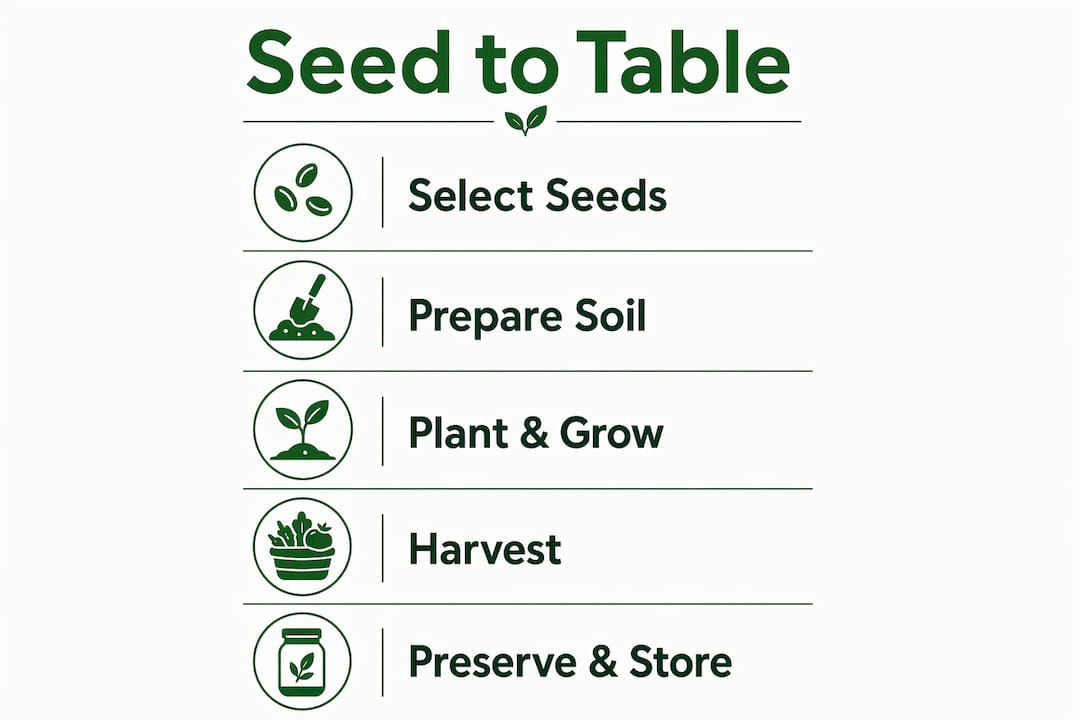
The organic seed-to-table process follows six clear stages. Each stage builds on the last, and skipping one weakens the whole system.
-
Seed selection. Choose heritage or open-pollinated varieties. These seeds reproduce true to type, meaning you can save them each season and adapt your crop to your specific soil and climate. Over 95% of the vegetable seed market is controlled by four multinational corporations. That concentration makes saving your own open-pollinated seeds one of the most practical acts of food sovereignty available to home growers.
-
Soil preparation. Compost is the foundation. A balanced 65% brown to 35% green ratio in your compost pile optimises soil health and completes the cycle in 2–3 months. Browns are carbon-rich materials like straw and cardboard; greens are nitrogen-rich materials like kitchen scraps and fresh grass clippings.
-
Planting with intention. Integrate crop rotation and cover crops from the start. Diverse crop rotations break weed life cycles and reduce soil weed seed banks over time, according to NCAT’s organic production guidelines. Planting legumes like clover or field peas as cover crops also fixes nitrogen naturally, reducing your need for added fertilisers.
-
Harvest timing. Pick at peak ripeness for maximum nutrient density and flavour. Most vegetables lose measurable nutrition within hours of harvest if left in heat or sunlight. Harvest in the early morning when temperatures are cool and moisture content is highest.
-
Post-harvest handling. Move produce from garden to processing as quickly as possible. Minimal processing methods like hand-cleaning preserve nutrients far better than industrial heat or chemical washing. Avoid bruising by using shallow harvest bins and single layers.
-
Preservation. Choose your method based on the crop. Tomatoes, beans, and pickles suit canning. Berries, corn, and leafy greens freeze well. Herbs, mushrooms, and peppers dehydrate reliably. Selecting the right method for each crop is what turns a summer garden into a winter pantry.
Pro Tip: Plan your garden backwards. Decide which preservation methods you will use first, then choose crop varieties known to perform well under those conditions. The Canning Diva calls this “backward planning,” and it is the single biggest shift experienced seed-to-table growers make.
How do organic farming methods and biodiversity support the seed-to-table journey?
Organic production requires building biodiverse ecosystems that reduce reliance on synthetic inputs and enhance crop resilience. This is not simply a philosophy. It is a practical system where each element supports the others.
The core practices that build this resilience are:
-
Cover cropping. Planting rye, clover, or buckwheat between seasons protects bare soil from erosion, adds organic matter, and suppresses weeds without herbicides. Best for warmer areas of Canada.
-
Crop rotation. Moving plant families around the garden each year prevents pest and disease build-up in the soil. A three or four year rotation is the standard recommendation from NC State Extension.
-
Mulching. A 5–10 centimetre layer of straw or wood chips around plants retains moisture, moderates soil temperature, and blocks weed germination. This reduces watering frequency and physical weeding labour significantly. Best for Cooler and Dry areas.
-
Companion planting. Pairing plants like basil with tomatoes or nasturtiums with squash deters specific pests without sprays. Permaculture-inspired gardens use these relationships deliberately to reduce inputs.
-
Seed saving. Saving seeds from your strongest, healthiest plants each season selects for local adaptation. Over several generations, your varieties become genuinely suited to your microclimate.
Garden production is labour intensive and requires a long-term mindset focused on soil health and ecosystem balance rather than immediate high yields. That is not a warning. It is a clarification of what success looks like. Yields in year three of an organic garden routinely outperform year one because the soil biology has had time to establish.
Pro Tip: Inoculate legume seeds with rhizobium bacteria before planting. This naturally occurring soil bacteria forms a partnership with legume roots to fix atmospheric nitrogen. It costs very little and eliminates the need for nitrogen fertiliser on those beds entirely.
What practical tips improve harvest quality and post-harvest handling?
Harvest quality drops fast without the right handling practices. The gap between a nutrient-dense vegetable and a limp, flavourless one is often just a matter of hours and technique.
Efficient direct farm-to-consumer supply chains use vacuum sealing and climate-controlled storage to maintain produce quality after harvest. Home growers can apply the same logic at a smaller scale.
Key post-harvest practices that protect quality:
-
Harvest in the morning. Produce is coolest and most hydrated before the sun peaks. Afternoon harvesting accelerates wilting and nutrient loss.
-
Use single-pass cleaning. Rinse produce once in cool water rather than soaking it. Soaking leaches water-soluble vitamins like vitamin C and B-complex from cut surfaces.
-
Avoid sunlight exposure after harvest. Even 20 minutes of direct sun on harvested greens causes measurable wilting and chlorophyll breakdown. Move produce to shade or indoors immediately.
-
Store by crop type. Root vegetables prefer cool, humid conditions around 0–4°C. Tomatoes and cucumbers degrade faster in cold storage and are better kept at room temperature until processed.
-
Vacuum seal for extended storage. Removing oxygen from storage bags slows oxidation and microbial growth. This is particularly effective for blanched vegetables destined for the freezer.
The goal of minimal handling is to preserve the enzymes and flavour compounds that make homegrown food taste noticeably better than store-bought produce. Industrial processing destroys these compounds through heat and mechanical stress. Hand-cleaning and cold storage protect them.
Which preservation strategies best maintain nutrition and flavour?
Choosing crops suited for canning, freezing, and root storage rather than just fresh eating is the key to year-round pantry stocking. Each preservation method has different requirements, and matching method to crop prevents both safety risks and quality loss.
| Preservation method | Best crops | Key consideration |
|---|---|---|
| Water bath canning | Tomatoes, pickles, jams, fruit | Requires high acidity (pH below 4.6) for safe processing |
| Pressure canning | Beans, corn, meat, low-acid vegetables | Reaches 116°C to eliminate botulism risk in low-acid foods |
| Freezing | Berries, greens, corn, blanched vegetables | Blanch most vegetables first to deactivate enzymes that cause freezer burn |
| Dehydrating | Herbs, peppers, mushrooms, fruit slices | Moisture content must drop below 10% to prevent mould |
| Root cellaring | Carrots, potatoes, beets, squash | Requires 0–10°C with moderate humidity for multi-month storage |
The distinction between water bath and pressure canning is not optional knowledge. Water bath canning is safe only for high-acid foods. Low-acid vegetables canned without a pressure canner carry a genuine botulism risk. The Canning Diva’s preservation resources cover this distinction in detail and are worth consulting before your first canning session.
Waste reduction is built into a well-run seed-to-table system. Tomato skins and cores become stock. Herb stems go into vinegar infusions. Overripe fruit becomes dehydrated leather or jam. Seasonal flexibility and letting the land’s productivity shape menus reduces waste and maximises flavour at the same time.
Pro Tip: Dehydrate herbs at 35–40°C rather than the maximum temperature setting. Lower heat preserves volatile oils that give herbs their flavour and medicinal value. High heat drives off these compounds in the first 30 minutes.
Key takeaways
The organic seed-to-table process succeeds when seed selection, soil health, organic cultivation, careful harvesting, and preservation planning work together as a single closed-loop system.
| Point | Details |
|---|---|
| Start with open-pollinated seeds | Heritage varieties allow seed saving and local adaptation, reducing dependence on commercial seed suppliers. |
| Build soil with balanced compost | A 65% brown to 35% green compost ratio completes in 2–3 months and feeds crops without synthetic fertilisers. |
| Use rotation and cover crops | Diverse rotations break weed cycles and build soil biology over multiple seasons. |
| Handle harvest with minimal processing | Hand-cleaning and cool storage preserve nutrients and flavour that industrial methods destroy. |
| Match preservation method to crop | Water bath canning suits high-acid foods; pressure canning is required for low-acid vegetables to prevent botulism. |
What I have learned from years of seed-to-table growing
The part no article tells you clearly enough is how much the mindset shift matters. Most new growers approach a seed-to-table garden the way they approach a grocery list: they decide what they want to eat and then try to grow it. That approach fights the garden constantly.
What actually works is letting the land’s seasonal rhythms dictate menus and crop use. When your zucchini produces more than you can eat fresh, you dehydrate it, freeze it, and make soup stock. You do not wish you had planted less. You adapt. That flexibility is what separates growers who thrive from those who burn out after one season.
True seed-to-table systems form closed loops where compost feeds gardens, gardens feed kitchens, and waste is minimised through intentional reuse. I keep a dedicated compost bin beside my kitchen door specifically so that every scrap goes back into the system without friction. That single habit has cut my soil amendment costs to near zero over three seasons.
Seed saving is the other practice I wish I had started earlier. The first year you save seeds feels like an experiment. By year three, your tomatoes germinate faster, set fruit earlier, and handle your specific soil conditions better than any commercial variety you can buy. That local adaptation is irreplaceable.
— Michael
Organic seeds for Canadian growers from Matchesseeds
Growing your own food from seed starts with genetics you can trust. Matchesseeds specialises in premium, non-treated, open-pollinated, and heirloom seeds selected for Canadian climates, which means shorter seasons, variable springs, and regional soil conditions are already accounted for.
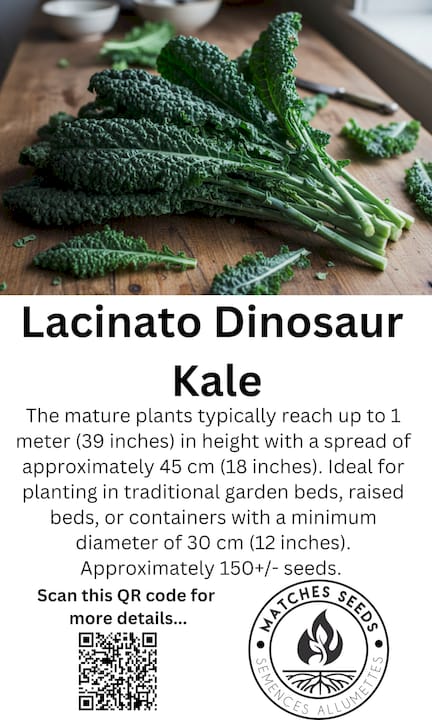
Matchesseeds offers free shipping across Canada on orders over $50, making it practical to stock up on multiple varieties for crop rotation and preservation planning. Whether you are starting your first kitchen garden or expanding an established plot, browse the full seed catalogue at Matchesseeds to find varieties suited to your region and your pantry goals. High germination rates and exceptional customer service are what growers across Canada consistently highlight about the experience.
FAQ
What is the seed-to-table process?
The seed-to-table process is an end-to-end growing system that takes food from seed selection through cultivation, harvest, and preservation without synthetic inputs. It prioritises soil health, open-pollinated varieties, and closed-loop waste practices.
Why does seed sovereignty matter for home growers?
Over 95% of the commercial vegetable seed market is controlled by a small number of multinational corporations. Saving open-pollinated seeds gives home growers independence from that system and builds crop varieties adapted to their specific climate and soil.
What is the safest way to preserve low-acid vegetables at home?
Low-acid vegetables like beans, corn, and carrots must be pressure canned to reach 116°C, which eliminates the risk of botulism. Water bath canning does not reach a high enough temperature for safe low-acid preservation.
How does composting support organic growing?
A balanced compost pile with a 65% brown to 35% green material ratio builds soil biology, improves drainage and water retention, and feeds crops without synthetic fertilisers. A well-managed pile completes in 2–3 months.
When is the best time to harvest for maximum nutrition?
Harvest in the early morning when produce is coolest and most hydrated. Move crops to shade or cool storage immediately after picking to prevent nutrient loss and wilting.