
Eco-friendly seed sourcing practices for Canadian gardeners
Eco-friendly seed sourcing practices are methods that prioritise sustainability, genetic diversity, and ecosystem health by selecting seeds responsibly from local or ecologically appropriate sources. For Canadian gardeners, this means going beyond simply buying seeds and actively choosing varieties that support native wildlife, local pollinators, and long-term soil health. Community seed banks, native seed orchards, and climate-smart spatial tools are reshaping how gardeners think about seed selection. The choices you make at the seed stage ripple outward into your entire garden ecosystem.
1. Why eco-friendly seed sourcing practices start with local provenance
Local provenance is the single most important factor in sustainable seed sourcing. Seed provenance encompasses geographic, ecological, and genetic factors that determine whether a plant will thrive in its planting site. Seeds carry internal genetic clocks that regulate dormancy break, flowering time, and growth cycles tuned to specific local climates. A seed from a different eco-region may germinate at the wrong time, miss local pollinators, and ultimately fail.
This timing mismatch has a name: phenological mismatch. It occurs when seeds sourced from ecologically different zones bloom or emerge out of sync with local environmental cues. The result is not just a poor harvest. It can disrupt pollinator relationships and weaken the broader ecosystem around your garden.
Local seed orchards address this directly. Seed orchards focused on local provenance improve seed availability while maintaining ecological integrity, supporting native wildlife and the ecological functions that healthy gardens depend on.
- Source seeds from within your own eco-region whenever possible
- Ask suppliers for provenance documentation, not just species names
- Prioritise seeds grown in similar soil types and moisture conditions to your garden
- Avoid seeds labelled only by common name with no geographic origin listed
Pro Tip: When buying from a seed supplier, ask specifically which province or region the seed stock originates from. “Canadian grown” is not specific enough. Provenance to the eco-region level is what matters for genuine local adaptation.
2. Ethical wild seed collection and sustainable harvesting
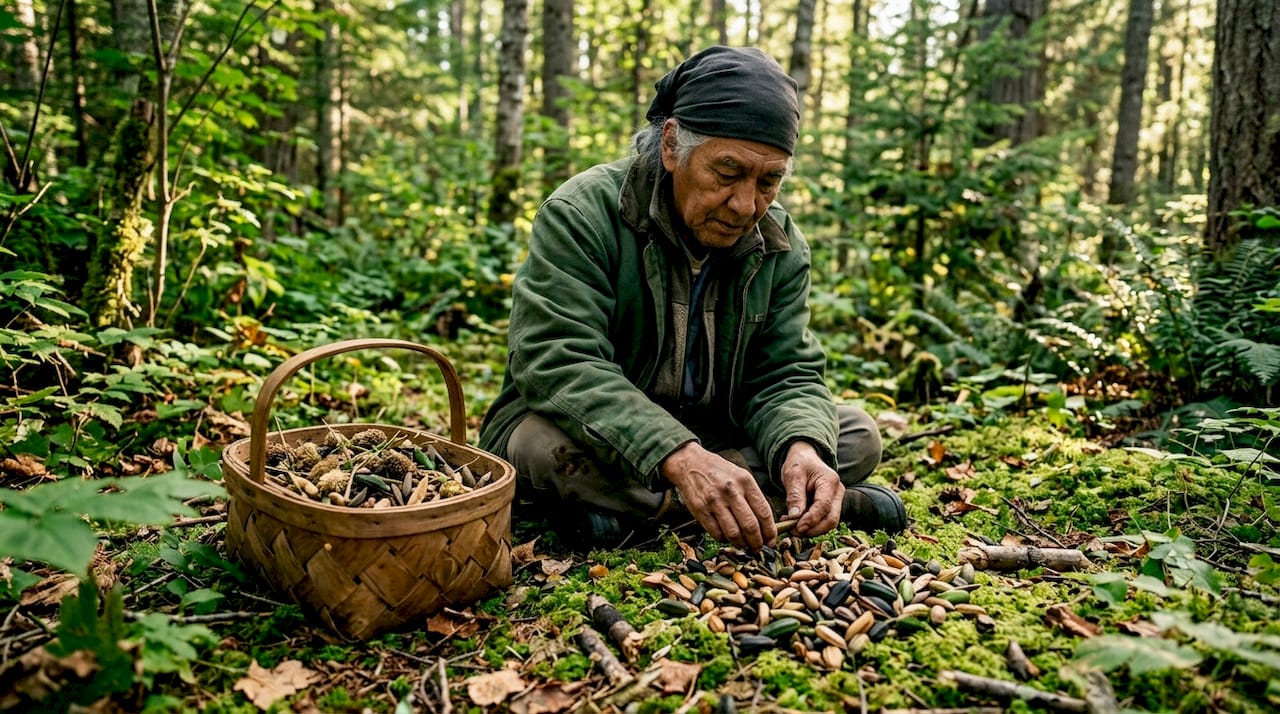
Responsible wild seed collection follows one firm rule: collect less than 10% of mature seed from any healthy wild population. Ethical wild harvesting means leaving at least 90% of available seed for natural regeneration and wildlife. This protects the genetic diversity of wild populations and keeps ecosystems functioning.
Before collecting from any wild site, you need landowner permission and a basic understanding of the plant population’s health. Collecting from stressed or small populations can push a local plant community toward genetic erosion. Healthy, abundant populations are the only appropriate source.
- Identify the plant population and assess its overall health before collecting
- Collect only from abundant, mature seed heads on multiple individual plants
- Never collect more than 10% of the visible seed crop from a single site
- Obtain written permission from the landowner or land manager
- Record the exact location, date, and ecological conditions of your collection
- Store seeds properly in cool, dry conditions immediately after harvest
Indigenous and local communities have practised sustainable seed harvesting for generations. Their knowledge of seasonal timing, plant relationships, and harvest limits is a model worth following. Partnering with or learning from local Indigenous seed keepers adds both ethical grounding and practical skill to your green seed selection approach.
Pro Tip: Wild seed collection works best as part of a multi-year plan. Seed amplification typically requires a three-year lead time before wild-collected seed can be used at any meaningful scale. Start small and grow your seed stock gradually.
3. Supporting community seed banks and local seed networks
Community seed banks are one of the most powerful tools in ethical seed sourcing methods. Seed saving through community networks supports local landscapes, food sovereignty, and sociocultural wellbeing by reducing dependence on large-scale commercial seed markets. For gardeners, they are a direct source of heirloom and native varieties adapted to local conditions.
Seed banks also preserve genetic diversity that commercial suppliers rarely stock. A community seed library in your region may hold varieties of tomatoes, squash, or wildflowers that have been grown locally for decades. That local history is encoded in the seed’s genetics.
- Search for seed libraries at local community centres, public libraries, or horticultural societies
- Participate by returning saved seeds at the end of the season, not just borrowing
- Attend seed swaps to exchange varieties and build relationships with local growers
- Connect with provincial native plant societies for regionally specific seed sources
Building sustainable seed systems requires gardeners to see seed saving as a vital contribution to biodiversity preservation, not just a hobby. When you save and share seeds, you become part of a living genetic archive that no commercial catalogue can replicate.
4. Organic seed procurement: opportunities and real challenges
Organic seed procurement is a core component of responsible seed farming techniques, but the supply chain has real gaps. Organic food demand grew 12% in 2020, yet organic seed supply has not kept pace. That gap means most organic farmers and gardeners still rely on non-organic seed due to availability constraints.
The challenge is not just finding organic seeds. Certification requirements, shorter shelf life, and limited variety selection all create friction. Despite this, the organic seed market is growing and more suppliers are entering the space each year.
| Factor | Organic seed | Conventional seed |
|---|---|---|
| Chemical treatments | None | Often treated with fungicides |
| Variety selection | Growing but limited | Broad and widely available |
| Certification | Required for organic growers | Not required |
| Ecological impact | Lower input footprint | Higher chemical dependency |
| Availability in Canada | Improving steadily | Widely available |
When organic seed is not available for a specific variety, the accepted practice in certified organic growing is to use untreated conventional seed. For home gardeners, untreated and open-pollinated seed is the next best choice. Organic seed adoption is constrained by supply chain and certification challenges, but choosing untreated seed is a meaningful step in the right direction.
5. Climate-smart seed sourcing for future-proof gardens
Climate change is making the “source local only” rule more complicated. Up to 88% of Brazil’s land is projected to experience seed-zone mismatches by 2100, illustrating how dramatically climate shifts can disrupt seed suitability. Canadian gardeners face the same challenge at a regional scale as temperature and precipitation patterns shift northward.
Climate-smart seed sourcing moves beyond a simple local-versus-non-local debate. Spatially explicit tools now assist ecosystem restoration by modelling both current and future climate conditions to identify seed sources adapted to where your climate is heading, not just where it is today. These tools were developed for large-scale restoration but the underlying logic applies directly to garden planning.
Practitioners are encouraged to move beyond local-only sourcing and use climate-smart, spatially explicit strategies that account for projected change. In practice, this means experimenting with seed from regions slightly warmer or drier than yours, while keeping the majority of your seed sourcing local. A ratio of roughly 80% local provenance to 20% climate-forward seed gives your garden both stability and resilience.
6. How to build eco-friendly seed sourcing into your gardening practice
Sustainable seed sourcing is not a single purchase decision. It is a multi-year practice that improves with each season. The most effective approach combines local provenance seed, ethical procurement habits, and careful record-keeping.
- Write down the provenance of every seed you plant, including supplier, region of origin, and year of harvest
- Set aside a portion of your garden each year specifically for seed saving
- Build relationships with two or three trusted local suppliers who can document their seed origins
- Experiment with one or two climate-forward varieties each season alongside your proven local seed
- Review your planting records each autumn and note which provenances performed best
Tracking seed provenance and planting success over multiple seasons gives you data that no seed catalogue can provide. You learn which local varieties thrive in your specific microclimate, which suppliers are genuinely transparent about origins, and where your garden is most vulnerable to seasonal variation.
Budget does not need to be a barrier. Community seed banks, seed swaps, and saving your own seed from open-pollinated varieties are all low-cost or free. The investment is time and attention, not money. Over several seasons, a well-maintained seed saving practice can significantly reduce your annual seed spend while improving the ecological quality of your garden.
Key takeaways
Eco-friendly seed sourcing practices succeed when gardeners combine local provenance, ethical harvesting, community seed networks, and climate-smart planning into a consistent, multi-year approach.
| Point | Details |
|---|---|
| Local provenance first | Source seeds from your own eco-region to match genetic adaptation to local soils and climate. |
| Ethical wild harvesting | Never collect more than 10% of wild seed from any population; always get landowner permission. |
| Community seed banks | Join local seed networks to access heirloom varieties and contribute to genetic diversity. |
| Organic and untreated seed | Choose certified organic or untreated open-pollinated seed to reduce chemical inputs. |
| Climate-smart planning | Blend local provenance seed with climate-forward varieties to build long-term garden resilience. |
What years of seed sourcing have taught me
Most gardeners underestimate how much the origin of a seed matters. I have watched gardeners spend significant effort on soil preparation, watering schedules, and pest management, only to plant seeds with no documented provenance. When those plants underperform, the seed is rarely blamed. It should be.
The shift that changed my own gardening was treating seed sourcing as a research task, not a shopping task. Before I buy any seed, I want to know where it was grown, in what conditions, and by whom. That information is available from good suppliers. When it is not available, that absence tells you something important about the supplier.
The community seed bank model is genuinely underused in Canada. Most gardeners do not know their local seed library exists. The varieties held in those libraries represent decades of local adaptation that no commercial catalogue stocks. Connecting with your regional seed network is one of the highest-value steps you can take for your garden and for local biodiversity.
Climate-smart sourcing is the frontier most gardeners have not reached yet. The idea of sourcing seed from a slightly warmer region to prepare for future conditions feels counterintuitive at first. But the logic is sound and the tools to support it are improving every year. Start with a small experiment. Plant one or two climate-forward varieties alongside your local seed and observe the difference over two or three seasons. The data you collect in your own garden is more useful than any general recommendation.
— Michael
Seeds worth growing: what Matchesseeds offers Canadian gardeners
Canadian gardeners need seeds that are matched to Canadian conditions, and that is exactly where Matchesseeds focuses its work. The selection at Matchesseeds prioritises non-treated, heirloom varieties with documented high germination rates, sourced with the specific challenges of Canadian climates in mind.
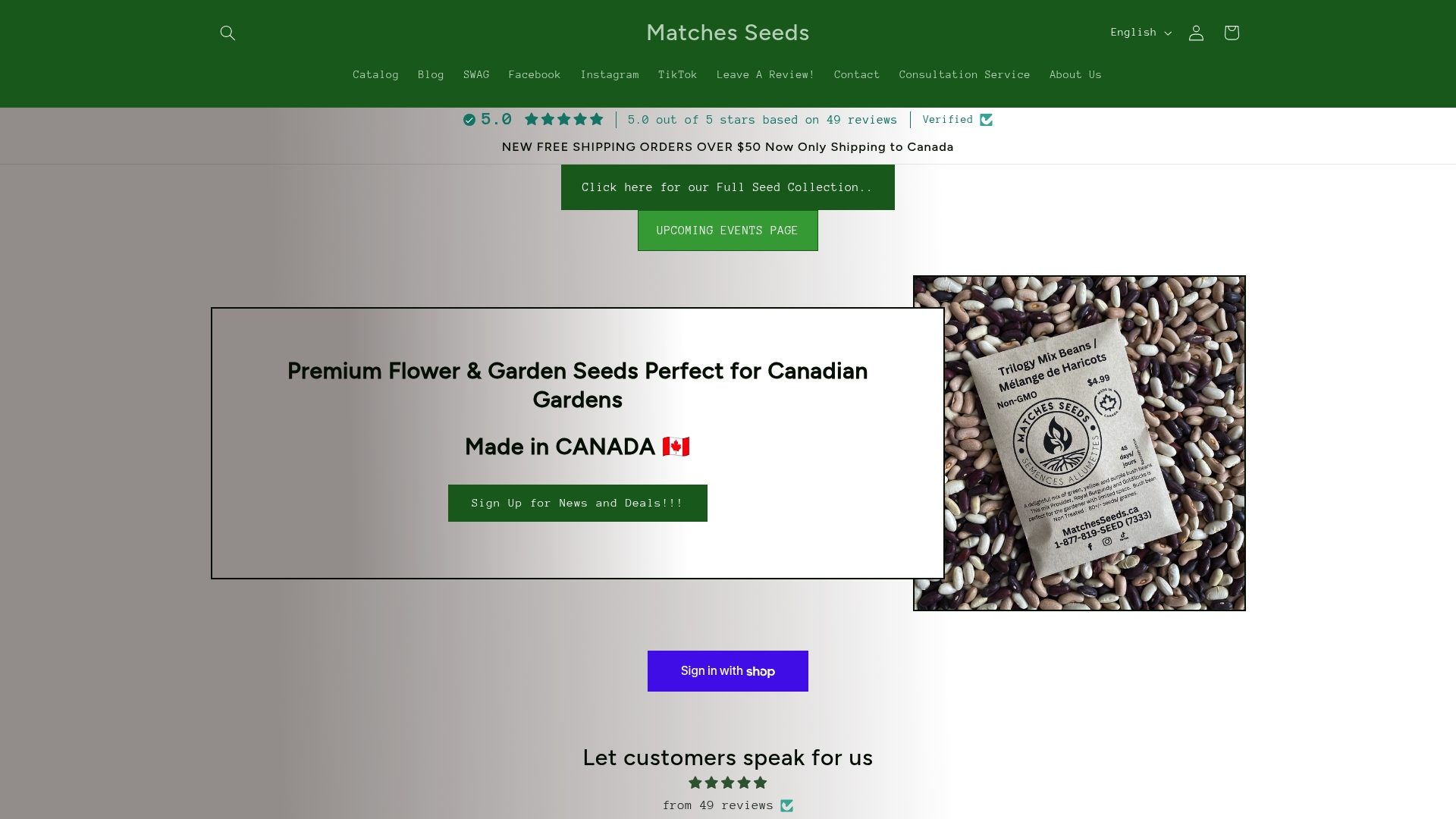
Whether you are building a pollinator garden, restoring a native plant bed, or simply growing food with fewer chemical inputs, Matchesseeds carries varieties suited to the task. Free shipping on orders over $50 across Canada makes it practical to stock up on quality seed without inflating your gardening budget. Visit Matchesseeds to browse the full selection and find seeds that are genuinely suited to where you garden.
FAQ
What are eco-friendly seed sourcing practices?
Eco-friendly seed sourcing practices are methods of selecting and obtaining seeds that prioritise local provenance, genetic diversity, and minimal ecological harm. They include sourcing from community seed banks, practising ethical wild harvesting, and choosing organic or untreated seed.
Why does seed provenance matter for gardeners?
Seed provenance determines how well a plant is genetically adapted to your local climate, soils, and seasonal cues. Seeds from mismatched eco-regions can fail to synchronise with local pollinators and environmental conditions, reducing both garden success and ecological value.
How do community seed banks support biodiversity?
Community seed banks preserve heirloom and native varieties that commercial suppliers rarely stock, maintaining genetic diversity and supporting local food sovereignty. Gardeners can both borrow and contribute seeds, building a living archive of locally adapted plant genetics.
What is climate-smart seed sourcing?
Climate-smart seed sourcing uses spatial data tools to identify seed sources adapted to both current and projected future climate conditions. It moves beyond sourcing only from your immediate region to include varieties from areas that reflect where your local climate is heading.
Where can I find environmentally friendly seed suppliers in Canada?
Matchesseeds specialises in non-treated, heirloom seeds tailored to Canadian climates, making it a strong starting point for gardeners seeking environmentally friendly seed suppliers. Local seed libraries, provincial native plant societies, and regional seed swaps are also reliable sources for locally adapted varieties.